
In our increasingly polarized world—where everything is binary, where blunt black-or-white has replaced the subtlety of gray—it is beyond heartening to read about a woman whose brilliance embodied contradictions and whose profound understanding of the rights of women ignited the 19th-century movement that made us political equals today.
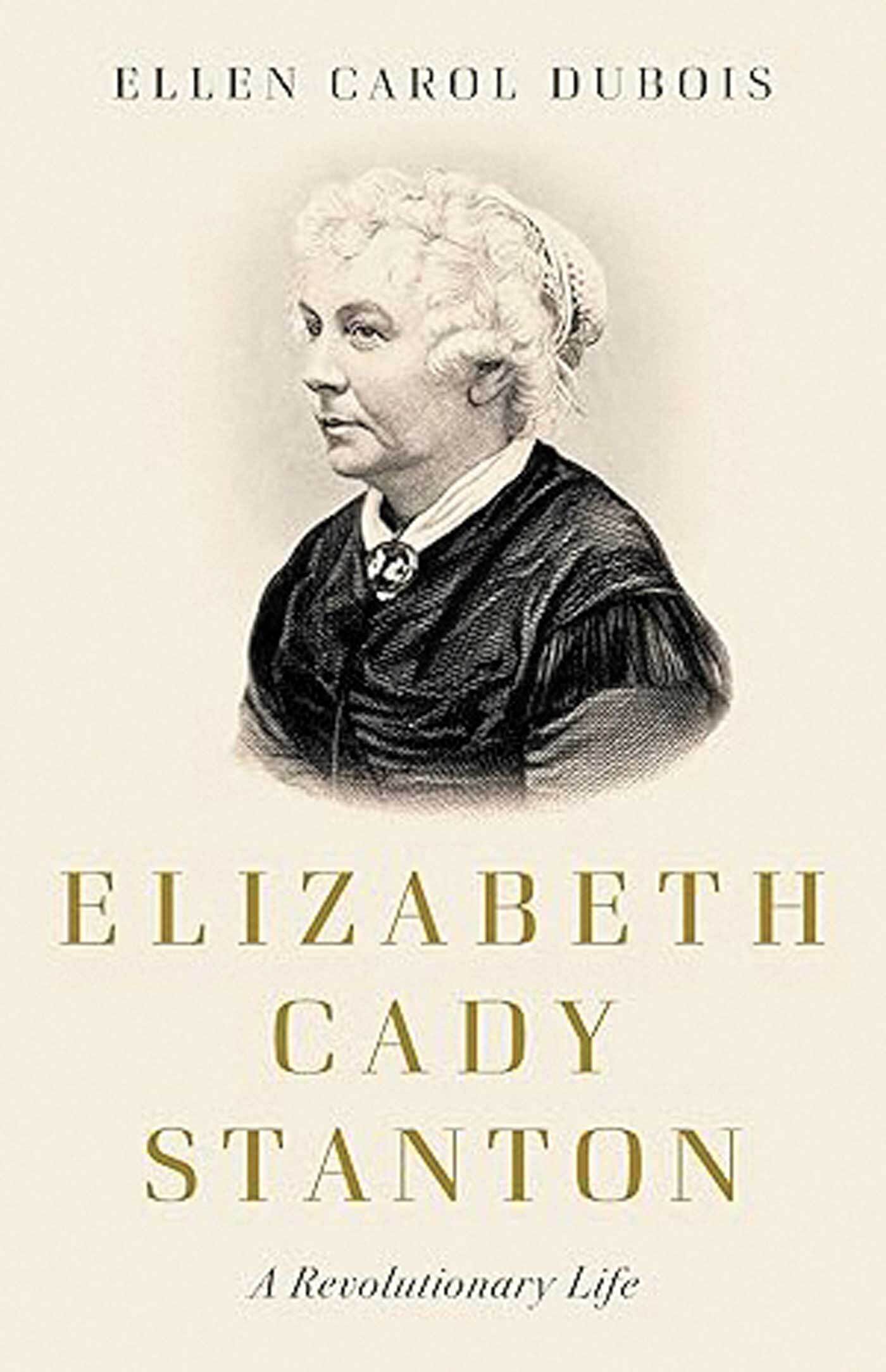
Ellen Carol DuBois ’68, distinguished research professor of history at UCLA, summarizes her subject in this deeply researched and carefully nuanced biography, for which we should all be grateful.
Elizabeth Cady Stanton is best known for co-organizing the 1848 Seneca Falls Convention that issued the first public demand for women’s right to vote. Although it took more than a century to accomplish fully such a radical goal, that was the easy one. Stanton, the mother of seven, also lobbied, organized, lectured, and wrote on every aspect of women’s inequality: divorce rights, property rights, child custody, coeducation, sexual autonomy, even the right to wear pants instead of street-sweeping, bulky skirts. DuBois calls it “the animating purpose of her life, to understand, challenge, and break through men’s long, historic domination of women.”
She was the philosopher of early feminism, and her legacy is our liberty.
But for all of Stanton’s heroism, there are also painful truths. She was a fierce abolitionist who wept at the horrors of the enslaved; a self-taught constitutional scholar who believed U.S. liberal republicanism and democracy could right its wrongs; and a leader with “bone-deep determination to win full rights and human freedom for women.” She also slipped into troubling territory around race and class.
DuBois confesses to struggling with Stanton’s inconsistencies. She has gone back to the sources, aware that viewing historical facts through the lens of contemporary trends is, to say the least, tricky. Especially when the subject so wisely nailed the hypocrisy of politicians she thought were her supporters: “It is not so much the will of the people that troubles the politician, as the safety of the party in power.”
Sound familiar? Stanton wrote that in 1867, when she felt woman suffrage was about to be elbowed aside so Black men could vote.
Stanton died in 1902, just before her 87th birthday. When Susan B. Anthony—Stanton’s dear friend and lifelong partner in the suffrage wars—got the news, she was distraught. “Well, it is an awful hush,” Anthony wrote, “it seems impossible—that the voice is hushed—that I have loved to hear for fifty years. …”
Thanks to DuBois, that voice now continues to ring out—to remind, to inspire, and to spur new generations to create their own history.
The Price of Deception
Victoria Shorr ’71, Fatherland: A Novel
W. W. Norton, 256 pages, $29.99
Victoria Shorr ’71 turns to the 1950s Midwest in her fifth work of fiction. Martin and Lora Brier, with three young children, possess all the trappings of a perfect life. But without warning, Martin abandons the family for his mistress and a new house on the other side of town. His departure reshapes them all, especially daughter Josie. Spanning decades, the novel traces Josie’s fraught relationship with her father and her struggle to make sense of loss and discover resilience.
The Way They Were
Susan McCarty ’99, 2008: A Novel
Carnegie Mellon University Press, 312 pages, $26.00
In this novel set in 2008, amid the rise of smartphones and blogs, Barack Obama’s hopeful presidential campaign, and the threats of the opioid crisis and housing collapse, Susan McCarty ’99 follows Stevie and Sam, former high school sweethearts brought back together by tragedy. Now adults stuck in disappointing lives, they confront old feelings and buried secrets. As Sam pursues a mystery and Stevie dreams of self-reinvention, they confront the gap between who they were and who they have become.
Fashion at the Edge of Modernity
Susan L. Siegfried ’71, The New Taste: Fashion and Art in the 1820s and 1830s
Yale University Press, 256 pages, $75.00
In this richly textured study of fashion’s engagement with art and modernity in the 1820s and 1830s, art historian and women’s studies scholar Susan L. Siegfried ’71 traces how clothing and style reflected a rapidly changing world. Through depictions of clothing and hairstyles in fashion plates, paintings, prints, and sculpture by artists including Jean-Auguste-Dominique Ingres, Horace Vernet, and Bertel Thorvaldsen, alongside texts by writers such as Honoré de Balzac and Thomas Carlyle, she illuminates a pivotal moment between classicism and realism.
The First Shaker
Nardi Reeder Campion ’38, Mother Ann Lee: Morning Star of the Shakers
Brandeis University Press, 205 pages, $19.95
This reissue of the 1976 biography by Nardi Reeder Campion ’38 brings Ann Lee to life. Lee established the Shaker movement in 1770 in England. Her core principles were radical: In an era when wives were possessions of their husbands, Lee proclaimed the equality of men and women. The Shakers believed in pacifism, celibacy, and the cleansing of sin through dancing and chanting. The book was used as a source for the 2025 film The Testament of Ann Lee, directed by Mona Fastvold and starring Amanda Seyfried.
For a list of new books, albums, and other media by members of the Wellesley community, see “Pages & Playlists.”
Sherr, a former longtime ABC News correspondent, is the author of Failure Is Impossible: Susan B. Anthony In Her Own Words.

Post a Comment
We ask that those who engage in Wellesley magazine's online community act with honesty, integrity, and respect. (Remember the honor code, alums?) We reserve the right to remove comments by impersonators or comments that are not civil and relevant to the subject at hand. By posting here, you are permitting Wellesley magazine to edit and republish your comment in all media. Please remember that all posts are public.