
For the first time in Wellesley College history, health and counseling services are available in the same space.
In April, the new Vivian A. Kao ’04 Health and Counseling Center opened its doors to the College community. The two-story, 12,000-square-foot space with floor-to-ceiling windows and light-wash timber houses the health center on one floor and counseling services on another. It is a far cry from Simpson Hall, the World War II-era red brick building it replaced.
Built in 1941 as a complement to Simpson Cottage, Simpson Hall (or Infirmary) allowed the College to offer modern medicine to students, faculty, and staff without them having to leave campus. “Think of an urgent care,” says Alvin Hung, the College’s assistant director of design
and project lead for the new center. Over the years, the building evolved to meet changing needs and demands. In 2019, Newton-Wellesley Medical Group, the physician group of Newton-Wellesley Hospital, came on board to provide on-campus medical care at Health Services at Wellesley.
Meanwhile, the Stone Center Counseling Service was located next door in Simpson Cottage, which meant students seeking care for both their physical and mental health had to shuttle between the two buildings. The cottage—an 1881 Queen Anne-style structure originally built as housing for “girls in delicate health, who were not fitted to endure the wear and tear of life in a large building,” according to an 1891 publication—will become the home of the Wellesley Centers for Women later this year.
When the College began considering which spaces on campus were due for renovation, Hung says, it became clear that the Simpson buildings were “not the highest standard that we could provide.” That’s when the idea to create a holistic care model, where health and counseling services would be available under the same roof, took hold.
The vision started with sustainability. Working with architectural firm Shepley Bulfinch and engineering firm Buro Happold, the College decided to retain about 80% of the concrete foundation and build a new structure on top using super-insulated prefabricated timber from New Hampshire-based firm Bensonwood.
“The biggest benefit of that is by preserving the existing foundation, we drastically reduced our embedded carbon footprint,” Hung says. “Imagine all the energy and all the resources it would take to remove a very heavy concrete foundation from 1941 and pour brand new virgin concrete.” And by using prefabricated timber for the structure, Hung notes, not only is the building made with natural materials, but it’s a much more efficient and less disruptive construction process.
The structure was prepared in Bensonwood’s facilities in New Hampshire and then, like “glorified IKEA furniture,” it was assembled on site by Needham Heights, Mass.-based Bowdoin Construction over two weeks last summer, creating “a super-insulated box from day one with the windows on it,” Hung says.
The building’s aesthetics were heavily influenced by biophilic design, a principle rooted in bringing the outside in. “Our campus is synonymous with landscape, so that meant bringing in lots of natural light through large windows and details that evoke nature, like greenery and leafy patterns,” Hung says. This approach is especially visible in the two-story Dahod Family Health and Counseling Common, which features stunning views of campus.
It’s a welcoming space for students, says Lisa Youngling Howard, the College’s associate dean and director of counseling at the Stone Center. Plus, the Stone Center, like health services in Simpson Hall, was simply running out of space, says Howard, a psychiatrist who has worked in college mental health for 16 years and who came to Wellesley in September 2024 from Smith College.
The Stone Center provides (at no cost to students) initial assessments, ongoing counseling services with a therapist or trainee, psychiatric medication management, urgent crisis support, group programs, and referrals to off-campus providers, when needed. The demand for counseling services has grown not just at Wellesley, but nationwide, over the past decade, Howard says.
Howard adds that women’s colleges tend to see a higher use of mental health services than coeducational institutions do. She thinks students tend to choose schools like Wellesley because “they feel it will be a safer or more supportive environment. In that regard, it’s a really important thing for a women’s college and a college like Wellesley to have really robust counseling services,” she says.
Photography by Lisa Abitbol
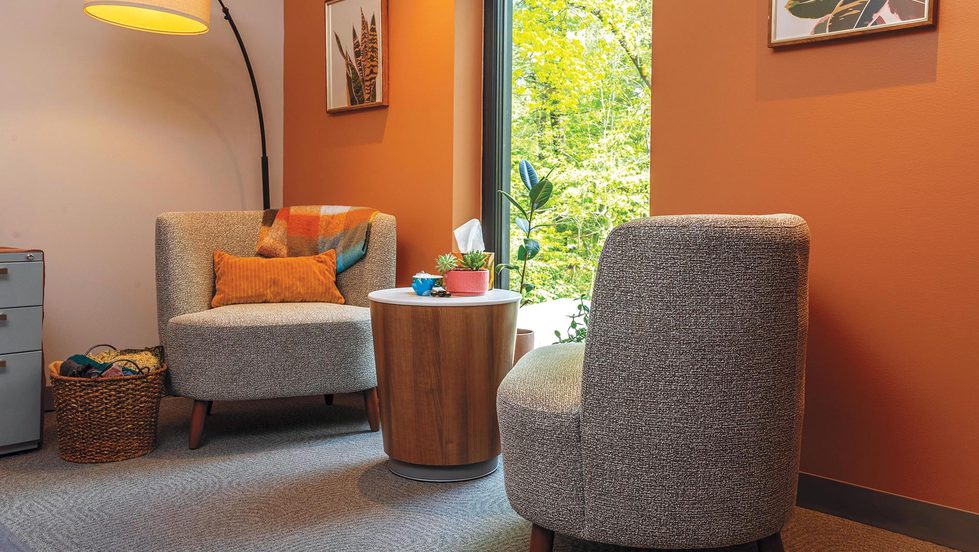
An office in the Stone Center Counseling Service
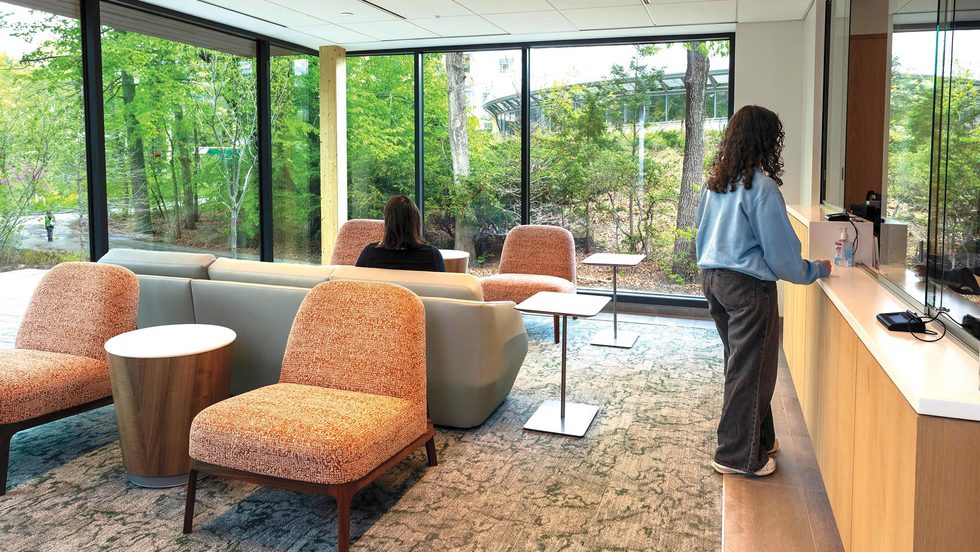
The reception area on the first floor of the Dahod Family Health and Counseling Common
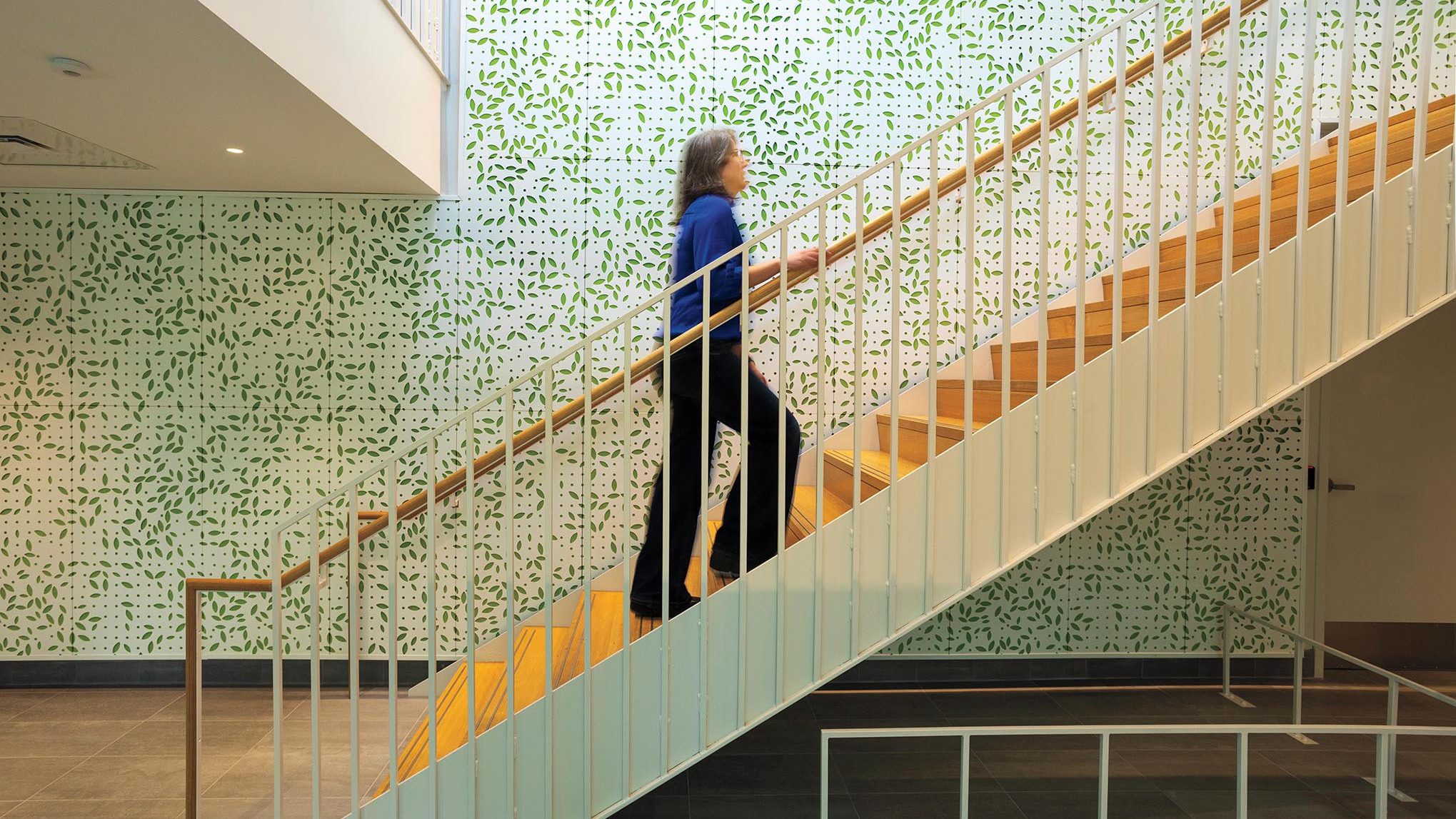
The staircase in the Dahod Common

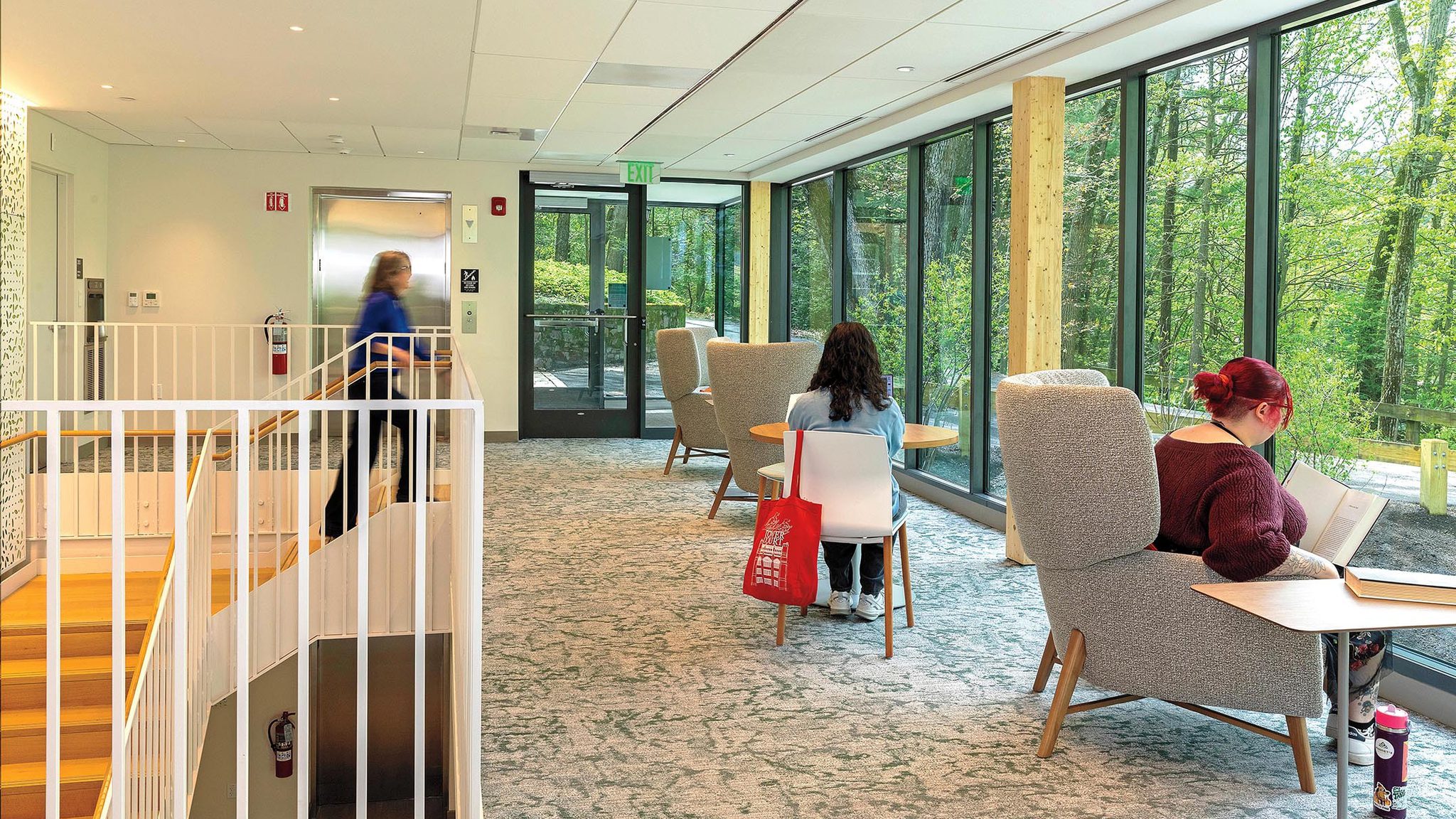
Comfortable seating on the second floor
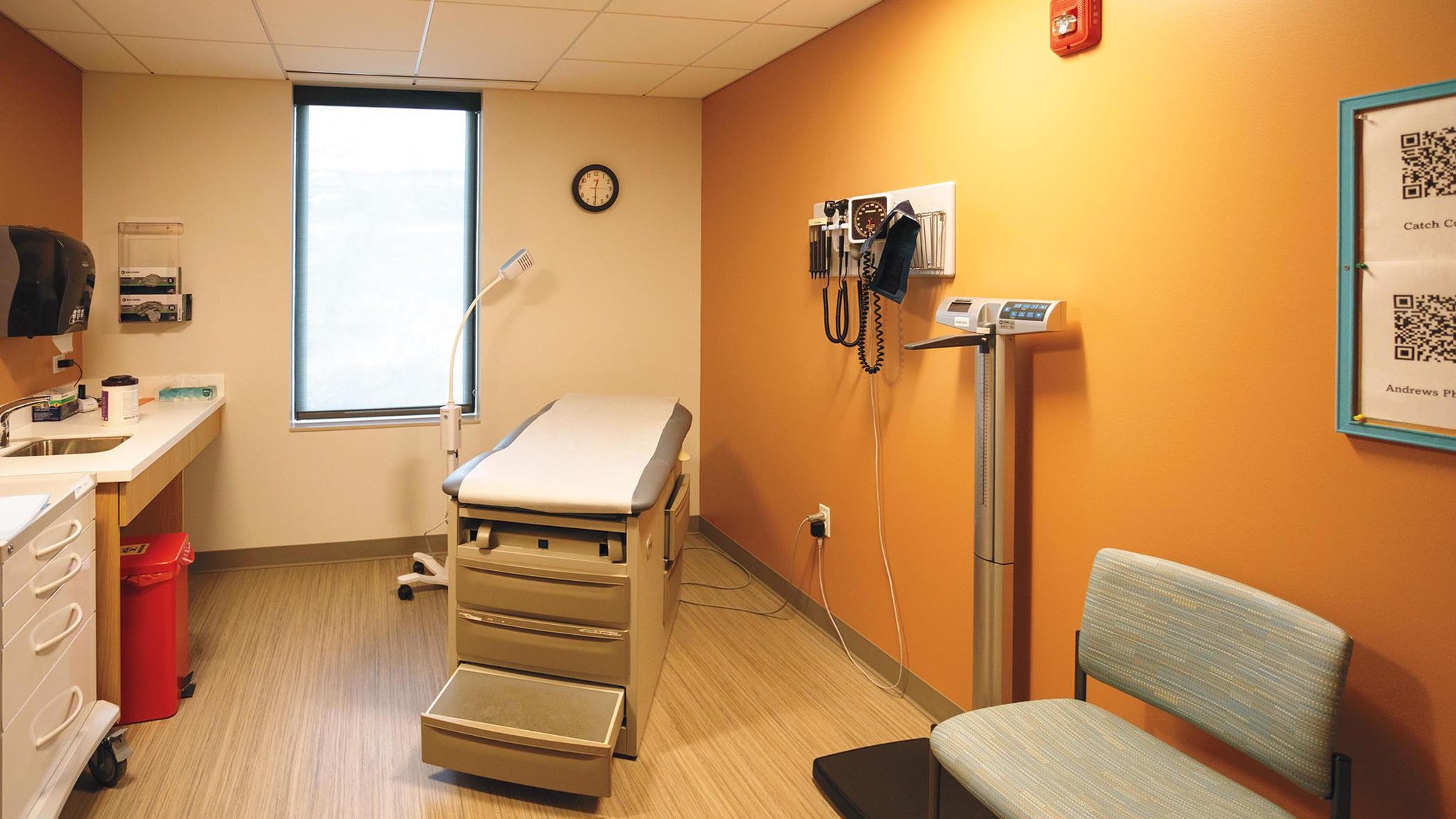
An exam room in Health Services
The people in these photos are magazine staff visiting the new building.


Post a Comment
We ask that those who engage in Wellesley magazine's online community act with honesty, integrity, and respect. (Remember the honor code, alums?) We reserve the right to remove comments by impersonators or comments that are not civil and relevant to the subject at hand. By posting here, you are permitting Wellesley magazine to edit and republish your comment in all media. Please remember that all posts are public.